Southeast Asia stands at the frontline of the global climate crisis, with rising sea levels, intensifying typhoons, prolonged droughts, and extreme flooding increasingly reshaping ecosystems, economies, and human livelihoods. The Intergovernmental Panel on Climate Change (IPCC) notes that rising temperatures are significantly heightening risks to social and economic sustainability in the region—intensifying heatwaves, amplifying monsoon-related flooding, and exacerbating climate extremes that threaten infrastructure, food systems, and public health. These environmental disruptions are deeply intertwined with human rights, affecting the rights to life, health, food, water, housing, work, cultural identity, and self-determination.
A 2015 Asian Development Bank (ADB) study estimates that Southeast Asia’s GDP could decline by up to 11% by 2100 under a business-as-usual scenario, with severe impacts on agriculture, tourism, fisheries, health, and labor productivity. Despite growing recognition of the right to a safe, clean, healthy, and sustainable environment in regional and international frameworks—including the ASEAN Human Rights Declaration and the ASEAN Declaration on the Right to a Safe, Clean, Healthy and Sustainable Environment—significant gaps persist between legal commitments and their practical implementation.
Climate governance in Southeast Asia continues to be shaped by development paradigms that prioritize economic growth, extractivism, and infrastructure expansion, often without sufficient accountability mechanisms or equitable safeguards for vulnerable communities. As a result, the climate crisis in the region is not only an environmental emergency but also a profound justice challenge. Communities that contribute the least to global emissions—including small-scale farmers, island populations, Indigenous peoples, and other marginalized groups—frequently bear the most severe consequences.
Questions of loss and damage, state responsibility, business accountability, meaningful participation, and equitable adaptation strategies are therefore increasingly central to regional discourse.
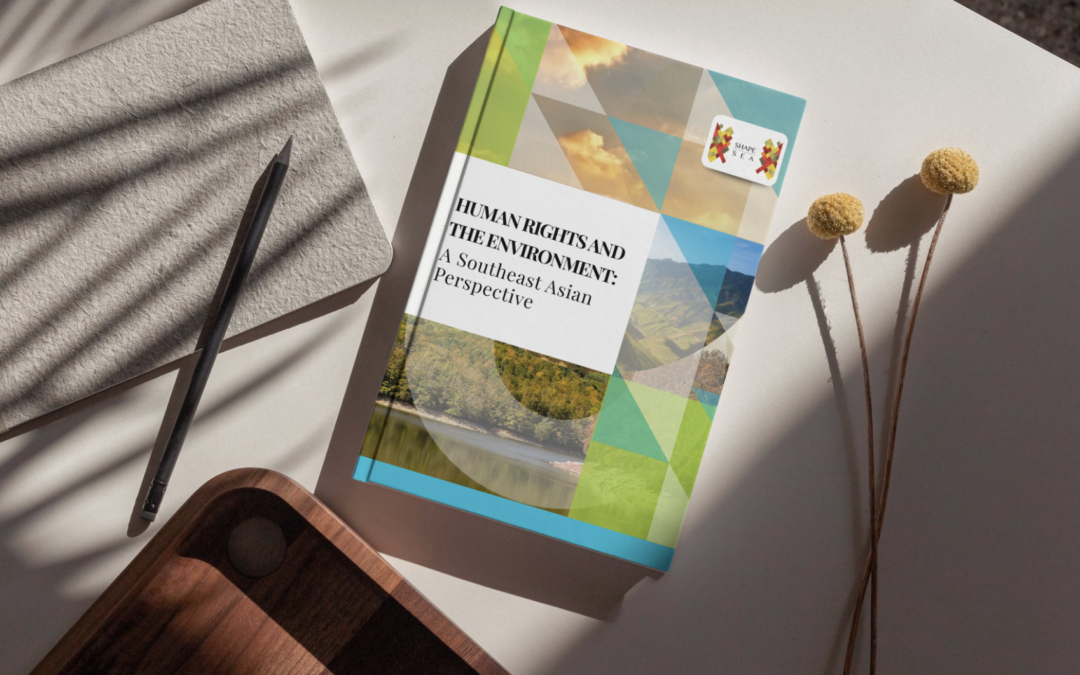
As part of the Commissioned Research Project on Human Rights and Environment in Southeast Asia, SHAPE-SEA brings together scholarly contributions that examine these intersections from grounded, community-based perspectives. This webinar, part of the Critical Horizons Series, marks the official launch of the commissioned research volume. While the volume addresses a broader range of issues at the intersection of human rights and the environment, this session curates selected chapters that foreground the climate crisis, justice, and accountability as urgent regional priorities.
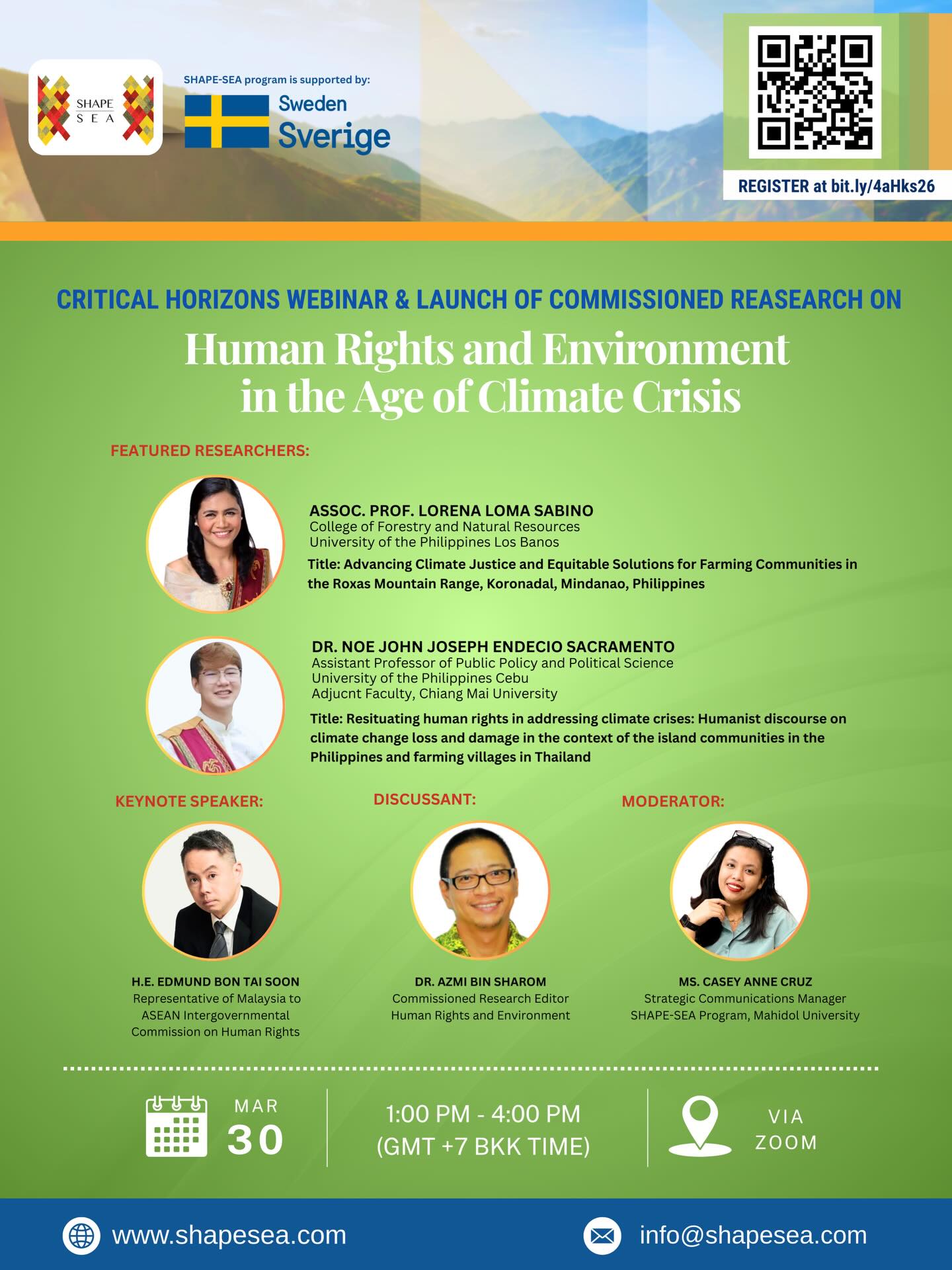
We are pleased to invite you to join the upcoming Critical Horizons Webinar session and Commissioned Research launch titled:
🌱 Human Rights and Environment in the Age of Climate Crisis: Justice and Accountability in Southeast Asia
🕒 Time:
- Indochina Time (GMT+7 – Thailand, Vietnam, Laos, Cambodia): 13:00 – 16:00
- Malaysia / Singapore / Philippines / Brunei (GMT+8): 14:00 – 17:00
- Indonesia (Western – Jakarta, GMT+7): 13:00 – 16:00
- Indonesia (Central – Bali, GMT+8): 14:00 – 17:00
- Indonesia (Eastern – Papua, GMT+9): 15:00 – 18:00
- Myanmar (GMT+6:30): 12:30 – 15:30
🌱 Please find the meeting details below:
Join Zoom Meeting
https://us06web.zoom.us/j/84151126050?pwd=bibArmbJPs9GZDTv97F1sggrRhBM0s.1
Meeting ID: 841 5112 6050
Passcode: 749875
Additional Join Instructions:
https://us06web.zoom.us/meetings/84151126050/invitations?signature=HJNeQdru-7AcH45uh1kp3xuLH1VaTqAiVet5NgZtHKw
We look forward to your participation in this important discussion!
#SHAPESEA #HumanRights #Environment #ClimateJustice