


The Intergovernmental Panel on Climate Change (IPCC) notes that rising temperatures are significantly heightening risks to social and economic sustainability in the region—intensifying heatwaves, amplifying monsoon-related flooding, and exacerbating climate extremes that threaten infrastructure, food systems, and public health. These environmental disruptions are deeply intertwined with human rights, affecting the rights to life, health, food, water, housing, work, cultural identity, and self-determination.
A 2015 Asian Development Bank (ADB) study estimates that Southeast Asia’s GDP could decline by up to 11% by 2100 under a business-as-usual scenario, with severe impacts on agriculture, tourism, fisheries, health, and labor productivity. Despite growing recognition of the right to a safe, clean, healthy, and sustainable environment in regional and international frameworks—including the ASEAN Human Rights Declaration and the ASEAN Declaration on the Right to a Safe, Clean, Healthy and Sustainable Environment—significant gaps persist between legal commitments and their practical implementation.
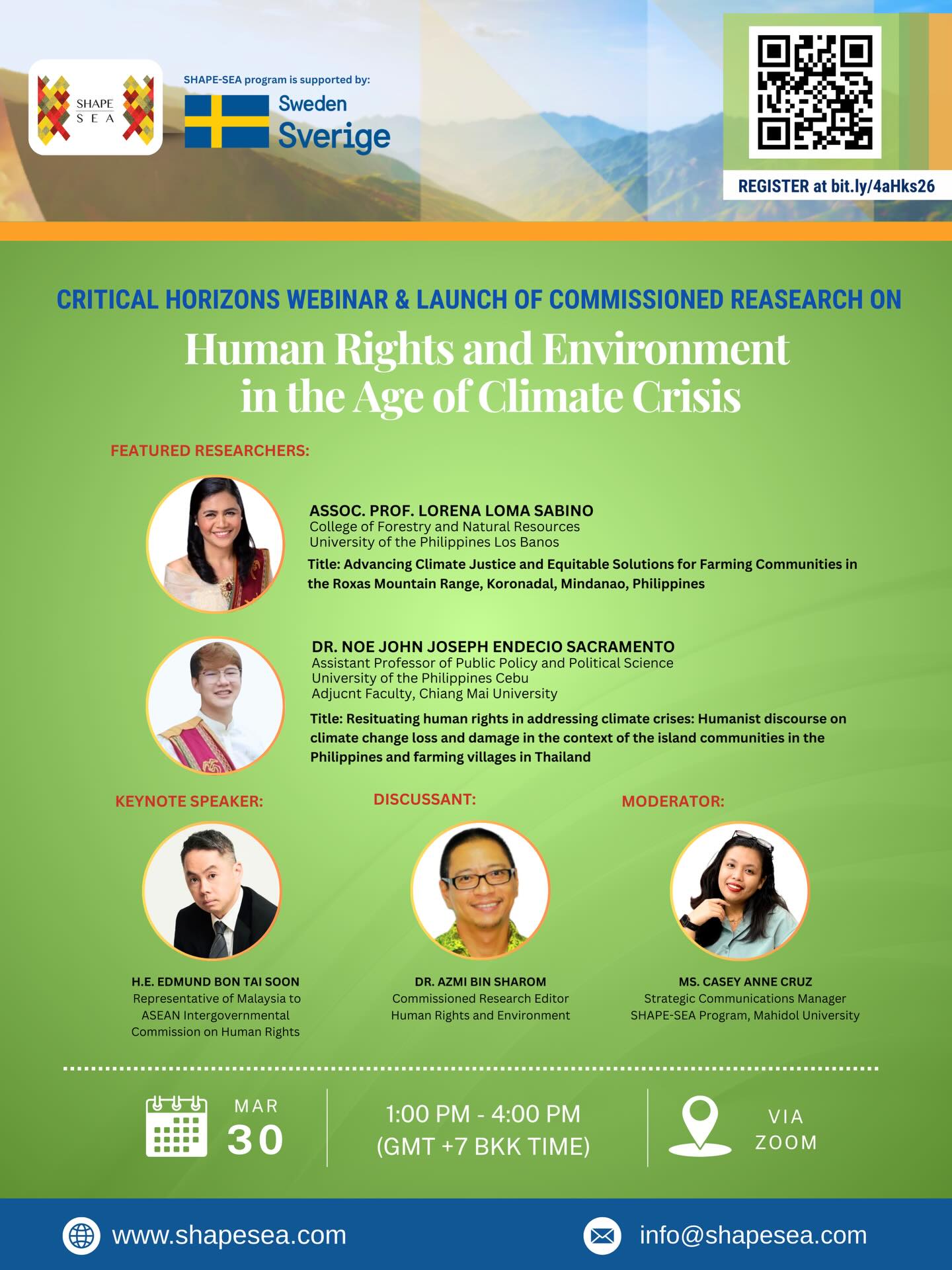

Climate governance in Southeast Asia continues to be shaped by development paradigms that prioritize economic growth, extractivism, and infrastructure expansion, often without sufficient accountability mechanisms or equitable safeguards for vulnerable communities. As a result, the climate crisis in the region is not only an environmental emergency but also a profound justice challenge. Communities that contribute the least to global emissions—including small-scale farmers, island populations, Indigenous peoples, and other marginalized groups—frequently bear the most severe consequences.