
Our Mission for Knowledge Dissemination

Regional Collaboration and Knowledge Dissemination

Turning Research into Regional Action: How SHAPE-SEA, ACWC, and AIT Advanced Gender Justice, Peace, and Policy Pathways for Southeast Asian Communities

In Southeast Asia, the issues shaping women’s lives and community well-being are rarely isolated. Human trafficking, climate and environmental pressures, technology-driven gender-based violence, and fragile peace processes continue to intersect across borders, affecting not only policy conversations but everyday realities on the ground. It is within this context that SHAPE-SEA, the ASEAN Commission on the Promotion and Protection of the Rights of Women and Children (ACWC), and the Asian Institute of Technology (AIT) helped move research beyond discussion and closer to regional action.

What began as a thematic study in early 2025 became a broader collaborative effort to respond to these realities with stronger evidence, deeper regional dialogue, and more policy-relevant knowledge. Launched by SHAPE-SEA in collaboration with the Gender and Development Studies program of AIT, the study on Gender, Human Rights, Peace, and Sustainable Development in Southeast Asia brought together 20 expert academics and researchers from Myanmar, Thailand, Cambodia, Vietnam, Malaysia, the Philippines, and Indonesia.

The inception workshop has served as a platform to identify priority issues, exchange perspectives across country contexts, and develop a collaborative research framework grounded in the region’s urgent and evolving challenges.

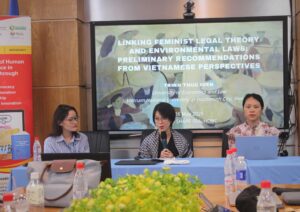
The process was significant not only because of who was involved, but because of what it sought to do. Rather than treating gender justice, peace, and sustainable development as separate policy silos, the study and the seminar that followed emphasized how closely these concerns are linked in the lived experiences of women and communities. Questions of violence, insecurity, exclusion, and development are often deeply connected, and responding to them requires research that is cross-country, interdisciplinary, and attentive to local realities. This orientation became even clearer during the Regional Research Seminar on Gender, Human Rights, Peace and Sustainable Development in Southeast Asia, convened by SHAPE-SEA, ACWC, and AIT in Bangkok on 20–21 January 2026.

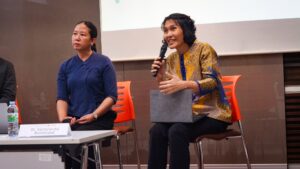
The seminar created a space where scholars, practitioners, and policy actors could engage one another not simply as observers of regional problems, but as contributors to a shared agenda for change. As SHAPE-SEA Executive Director Dr. Vachararutai Boontinand noted, the value of such a gathering lies in ensuring that knowledge is co-created and does not remain on paper, but instead informs policies and actions that advance gender equality, human rights, and sustainable peace.
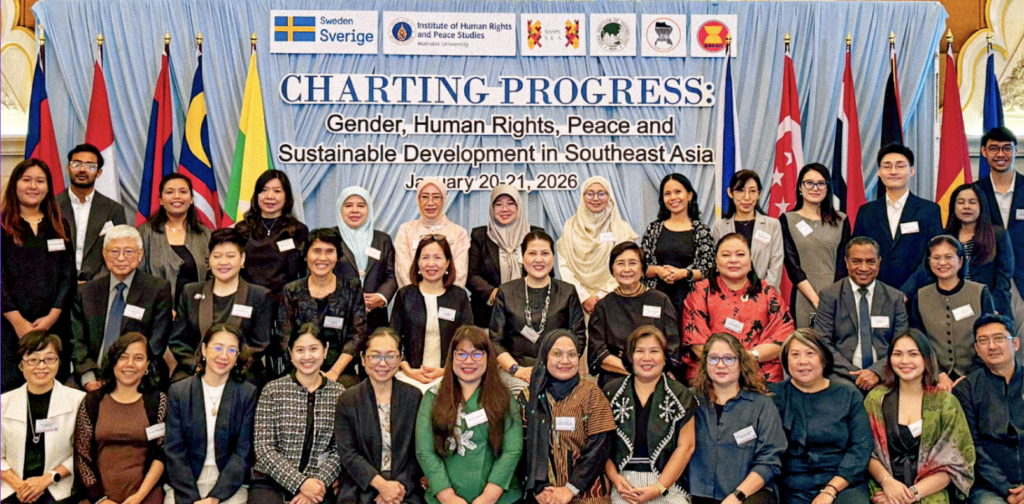

The discussions during the seminar reflected the complexity of the region itself. Participants engaged with pressing concerns including human trafficking, climate and environmental issues, technology-driven gender-based violence, and the vulnerability of women and girls, alongside the pursuit of more inclusive peace processes and foreign policies. These are not abstract themes. They shape access to safety, justice, livelihood, and voice for communities across Southeast Asia. By centering such issues, the seminar helped frame research not as an end in itself, but as a tool for understanding and responding to the realities faced by people across the region.

One of the clearest signs of impact was the way the process opened pathways between scholarship and policy. ACWC welcomed the potential for the research recommendations to inform and be applied in key priority areas of its work and mandate. That signal matters. In a regional environment where dialogue does not always translate into institutional uptake, the possibility that research insights could help shape priorities within an ASEAN body points to the importance of sustained collaboration between researchers and regional mechanisms.

The initiative also demonstrated the social value of building spaces where evidence, regional experience, and policy engagement can meet. Advancing women’s rights and gender equality, as noted by Thailand’s representative to ACWC for Women’s Rights, requires more than declarations of support. It requires evidence, collaboration, and sustained dialogue across sectors. Its impact lies not only in the study launched, the seminar convened, or the framework developed, but in the larger proposition it advanced: that rigorous, regionally grounded research can help build more responsive policies and more just futures for Southeast Asian communities. #

Knowledge Dissemination

Access copies of our books across the region

📘 Human Rights Outlook 2023 offers a critical look into the evolving human rights landscape across Southeast Asia. Bringing together the insights of scholars, researchers, and activists, the report explores pressing issues, emerging trends, and ongoing challenges shaping ASEAN societies today. More than a publication, it is a valuable resource for policymakers, educators, advocates, and individuals committed to advancing justice, peace, dignity, and equality in the region. Through collective analysis and regional perspectives, the report encourages deeper understanding, dialogue, and action toward a more rights-based Southeast Asia.

Access copies of our books across the region

READING CORNERS

READING CORNERS

GET YOUR COPIES NOW!

SHAPE-SEA books and resources are available both online and offline. To request specific copies, you may email us at info@shapesea.com. Free copies may also be available during our events, conferences, and training programs. We also do our best to disseminate copies to libraries and reading corners across Southeast Asian countries.

GET YOUR COPIES NOW!

Be part of the growing network of scholars and advocates.

Join our efforts to advance human rights and peace research across Southeast Asia.