Reflection and Insights
Women Have Spoken. Who Is Listening? | The Politics of Listening in Lawmaking
Leony Sondang Suryani, Project Lead of Increasing Research Capacity and Knowledge Dissemination, SHAPE-SEA, Mahidol University, Thailand
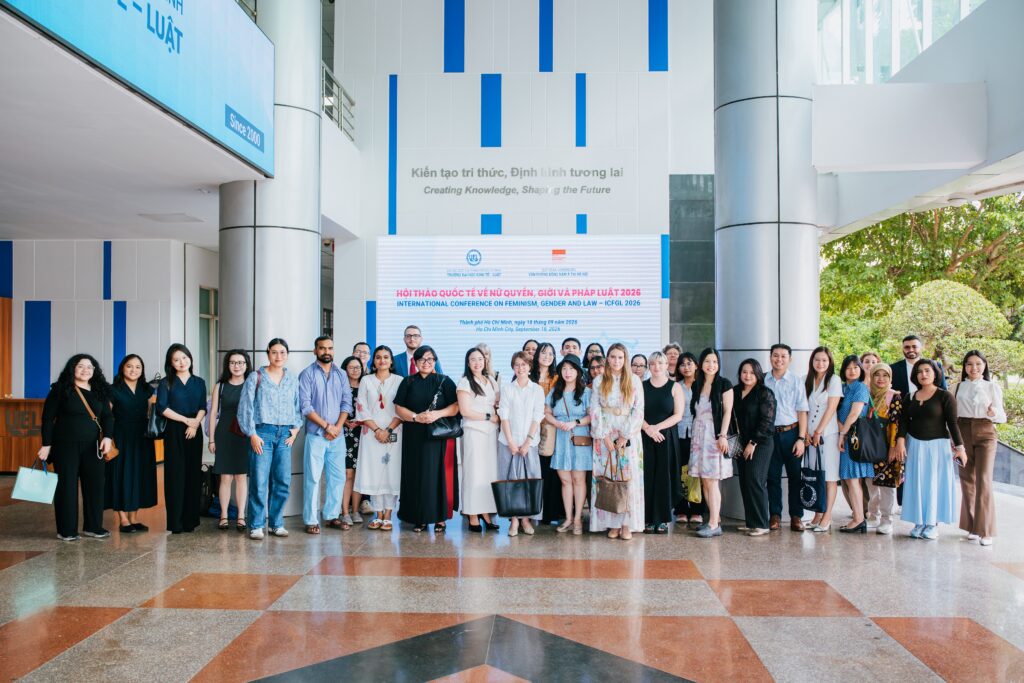
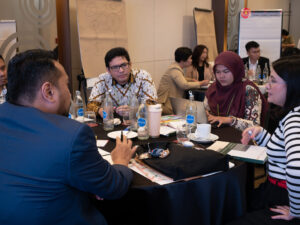
Reflections drawn from the 2026 International Conference on Feminism, Gender and Law, a biennial academic forum held in Ho Chi Minh City, Vietnam.
Women Have Spoken. What Happens Next?
“Who is listening? Is anyone listening? How are they listening?”
These questions, raised during a presentation on the morning plenary session regarding women and Australian law reform, stayed with me after the 2026 International Conference on Feminism, Gender and Law, a biennial academic forum held in Ho Chi Minh City, Vietnam. They ask us to examine what happens after women speak: who receives their words, how their experiences are interpreted, and what becomes of their proposals when institutions make decisions. Across the discussions, participation emerged as both a necessary opening and an unfinished promise. Women may enter institutions that have historically excluded them. They may be invited to share experiences of violence, discrimination, or threats to their livelihoods. Yet the opportunity to speak leaves another question unresolved: what authority do their contributions carry?
📄 Download Copy of the Reflection
The presentations addressed different settings, including legislative and judicial representation in India, institutional listening in Australia, and community resistance to industrial development in southern Thailand. Their differences matter. They cannot establish a single explanation for women’s exclusion across jurisdictions. Together, however, they prompted me to consider the distance between presence, voice, and influence.
My central concern is how institutions account for that distance. Feminist lawmaking requires attention to the conditions under which women participate and to the treatment of their knowledge throughout a decision-making process. The responsibility to demonstrate meaningful participation belongs, in substantial part, to those who possess the authority to decide.
Presence Does Not Guarantee Influence
In one of the workshop’s panels, a presentation on gender equality and lawmaking in India. The presenter examined the gap between India’s constitutional guarantees of equality and non-discrimination on grounds of sex and women’s continued underrepresentation in Parliament and the higher judiciary. This raised questions about women’s access to the authority to define rights and shape their protection.
During the Q&A, an audience member pushed the discussion further by asking how ideology affects the relationship between women’s representation and feminist lawmaking. If women entering these institutions hold conservative views or support existing gender hierarchies, would greater representation necessarily advance gender equality? The question drew attention to the distinction between women’s participation in legal institutions and their capacity or commitment to pursue feminist change.
Women bring different political commitments, social positions, and understandings of justice. They also act within institutions whose rules, professional expectations, and power structures can shape their choices. A woman may occupy a position of authority while supporting arrangements that other women experience as restrictive. Conversely, feminist arguments may find support among non-women actors.
The discussion, therefore, invited a more demanding understanding of representation. Alongside asking how many women enter legislatures or courts, we should ask which women gain access, what interests they advance, and whether institutional conditions enable them to challenge unequal relations. As a speaker in the session on feminist lawmaking cautioned, “We shouldn’t assume that all women will be similarly situated or will experience inequalities in the same way.” This is consequential for participation, too. A process may include women while overlooking differences in class, employment, disability, religion, or location. The presence of some women cannot establish that the concerns of others have been considered. Representation creates possibilities. Understanding what those possibilities achieve requires examining how power is exercised once access has been secured.

Heard as Witnesses, Recognized as Decision-Makers?
During one of the morning plenary sessions, a presentation on Australian law reform examined how institutions seek, interpret, and respond to the experiences of women who have experienced violence. Drawing on an ongoing research project, the presenter explored whether women’s contributions meaningfully inform law reform recommendations and outcomes.
The presenter described citation analysis as a way to examine where contributions from people with lived experience appear in inquiry reports. In the example discussed, those contributions were concentrated in the explanation of the problem, with very limited citation in the discussion of recommendations and legal or policy change. This pattern raises a difficult question about the authority accorded to experience. Women may be recognized as credible sources of information about harm, yet receive less recognition as people who can identify what should change. Their accounts help establish the urgency of reform. Others may then retain control over the definition of an appropriate response.
Citation patterns cannot, by themselves, reveal every form of influence. An account may shape a recommendation without being quoted beside it, and a report may contain quotations that have little bearing on its conclusions. The method is valuable as an entry point for investigating how institutions use contributions, alongside other evidence about deliberation and decision-making.
The deeper concern is whether the process can explain the journey from testimony to recommendation. Who selects the questions? Who translates an experience into a category that the institution recognizes? What is lost when fear, anger, uncertainty, or an account that does not fit the consultation’s structure is condensed into a report? The presenter’s discussion of the feminist ear, drawing on Sara Ahmed, connected listening with a duty to respond:
“You can’t listen with a feminist ear unless you are going to take the responsibility for acting on what you have heard.”
Acting on a contribution need not mean accepting every proposed solution. Participants may disagree, and institutions must assess competing proposals. It does require serious consideration and an explanation of what follows. Otherwise, consultation can ask women to undertake the emotional and intellectual work of speaking without making the listener’s obligations equally visible.
Agency within Unequal Conditions
Jumping back to the parallel session on Feminist Law-Making Methods. One of the interesting presentations was on “From Care to Co-Design: Women’s Activism as Feminist Law-Making in Thai Environmental Governance.” The discussion on resistance to industrial development in Chana, southern Thailand, offered another perspective on women’s knowledge and authority.
According to the account presented, local women documented marine resources and the value of existing livelihoods to challenge official representations of their area. They also contributed to proposals for a broader environmental assessment. Their work contested the evidence on which development decisions were being justified.
This matters because it places women within the production of knowledge. They were investigating their surroundings, challenging claims, and articulating alternatives for their community’s future. The case asks us to consider whose knowledge is recognized when an institution determines what counts as a development benefit or an environmental cost.The presentation also described women’s mobilization through maternal responsibilities and Islamic understandings of stewardship. These commitments helped make their environmental claims meaningful within their community. At the same time, the presenter noted that participation remained conditional for some women, who could join the movement only with their husbands’ permission. This tension deserves attention without erasing the women’s achievements. Agency can develop within relationships that continue to constrain it. Women may gain public authority through collective action while facing limits on the terms of their participation.
It also raises questions about the grounds on which women’s claims become legitimate. When women are recognized primarily as mothers who protect future generations, what space remains for those who articulate other identities or priorities? Can mobilization through familiar roles expand women’s authority over time? These are questions for further inquiry rather than conclusions that this presentation alone can resolve. The case encouraged me to examine participation as a situated practice: what women can do, what they must negotiate to do it, and whose experiences remain outside the account.
What Would Accountable Listening Require?
What drew me to these three presentations was how each exposed a different tension within women’s participation. The discussion on India raised the question of whether women’s presence in legal institutions necessarily advances feminist change. The Australian research examined what happens to women’s experiences after institutions receive them. The Chana case showed women producing knowledge and proposing alternatives while still negotiating restrictions on their participation. Together, they prompted me to consider how women gain access to a process, how their contributions acquire authority, and how far that authority extends into decisions.
These are distinct contexts, and the barriers they reveal require different responses. Yet a shared question runs through them: who determines the terms on which women participate and the weight their contributions receive? Those who control access, interpret testimony, and formulate recommendations exercise considerable power over what participation can achieve. This is why I found these presentations particularly compelling. Each pushed me to examine what follows an invitation to participate, including the institutional and social conditions that may limit its possibilities.
For me, the implication is that meaningful participation requires a closer examination of the relationship between listening and decision-making. How can women influence the questions being asked? How can they know what happened to their contributions? What responsibilities should institutions assume when they invite women to share knowledge and experiences? These questions suggest several ways to make listening more accountable.
First, women should have opportunities to shape the agenda early enough to influence which problems and alternatives are considered. An invitation to comment on a nearly final decision offers a different degree of influence from involvement in defining the issue. Early engagement should also make room for women whose priorities or experiences differ from those already represented.
Second, institutions should make the treatment of contributions traceable. A consultation process should explain how participants’ concerns informed recommendations, which proposals were modified or declined, and why. This requires documenting reasoning while protecting personal information where necessary. It also allows participants to question how their experiences have been interpreted.
Third, listening requires practical support. Time, language, accessibility, care responsibilities, and exposure to retaliation can affect who participates and what they can safely say. Institutions should examine these conditions with participants rather than assume that an open invitation creates equal access.
Fourth, feedback should return to those who contributed. Participants need opportunities to assess whether their accounts were understood and represented appropriately. They should also be able to learn what happened after recommendations were adopted and raise concerns about their implementation. These measures do not eliminate disagreement or guarantee a just outcome. They make institutional reasoning more visible and open to challenge. Crucially, they place responsibility on institutions to demonstrate how they considered women’s contributions and what they did in response.
The conference discussions help me consider this problem in terms of the relationship between knowledge and decision-making. If assessments focus primarily on women employed within industrial operations, whose experiences remain outside their scope? When women describe burdens that do not fit established indicators, can their accounts change what an assessment recognizes as a risk? And when those harms are documented, do women have opportunities to shape the proposed response? These questions connect the recognition of hidden costs with the authority of those who bear them to influence prevention and remedy.
They also turn my attention to my own practice. When I select quotations, organize findings, and formulate recommendations, I exercise authority over how other people’s experiences become knowledge. Identifying harms carries a further responsibility to consider whether the women whose accounts inform my work can recognize their priorities in its conclusions.
For me, these discussions offer a broader starting point for thinking about meaningful participation in Indonesia: who helps define the problems, whose knowledge informs possible solutions, and how women can influence the decisions that affect their lives. Recognizing women’s experiences carries a responsibility to consider what those experiences mean for law and policy, and what power women have to shape the response.
Bringing the Question Home: Reflections from Indonesia
As an Indonesian researcher working on gender, business, and human rights, I find these discussions particularly relevant to my understanding of participation in critical-mineral governance. They bring me back to a concern explored in an article I co-authored with Dr. Patricia Rinwigati, The Darker Shade of Green: Women and the Hidden Costs of Nickel Industrialization in Morowali, Indonesia, which examines how women can become visible within industrial development while their experiences and priorities remain marginal to its governance.
In that article, we examine women’s unequal inclusion in nickel industrialization alongside the gendered costs that extend beyond the workplace. Occupational segregation and limited career mobility coexist with unpaid care burdens, reproductive health vulnerabilities, and pressures on household and community life.
Our argument questions approaches that assess gender progress primarily through employment figures, diversity indicators, and procedural compliance. Such measures can record women’s presence while revealing little about their ability to influence the conditions under which industrial development takes place.
Listening as a Responsibility of Power
What I take from these discussions is that listening raises a question about the distribution of authority. Institutions exercise power when they decide whose experiences are relevant, how those experiences should be interpreted, and which demands can become proposals for change. Women may be invited into a process while these decisions remain beyond their influence. Their contributions can then lend legitimacy to an outcome they had little opportunity to shape.
This is where feminist lawmaking becomes demanding. Taking women’s experiences seriously may require institutions to reconsider their own assumptions: what counts as harm, which forms of knowledge deserve weight, and whose priorities define an acceptable solution. It also requires recognizing disagreement among women without allowing that disagreement to serve as grounds for dismissing their claims. The listener’s responsibility includes making these judgments visible and allowing those affected to question them. For me, the challenge extends to researchers who turn lived experience into findings and recommendations. Our interpretations can open possibilities for change, but they can also narrow what becomes possible by fitting women’s accounts into categories we have already chosen. We need to remain answerable for those choices.
Women have spoken. The test is whether their words can change the terms on which decisions are made, and whether those holding power are prepared to let that happen.